
دليل صحي
أورام الدماغ: أساسيات التشخيص وخيارات العلاج
2026-07-03 · 5 دقيقة قراءة · فريق د. أكشان
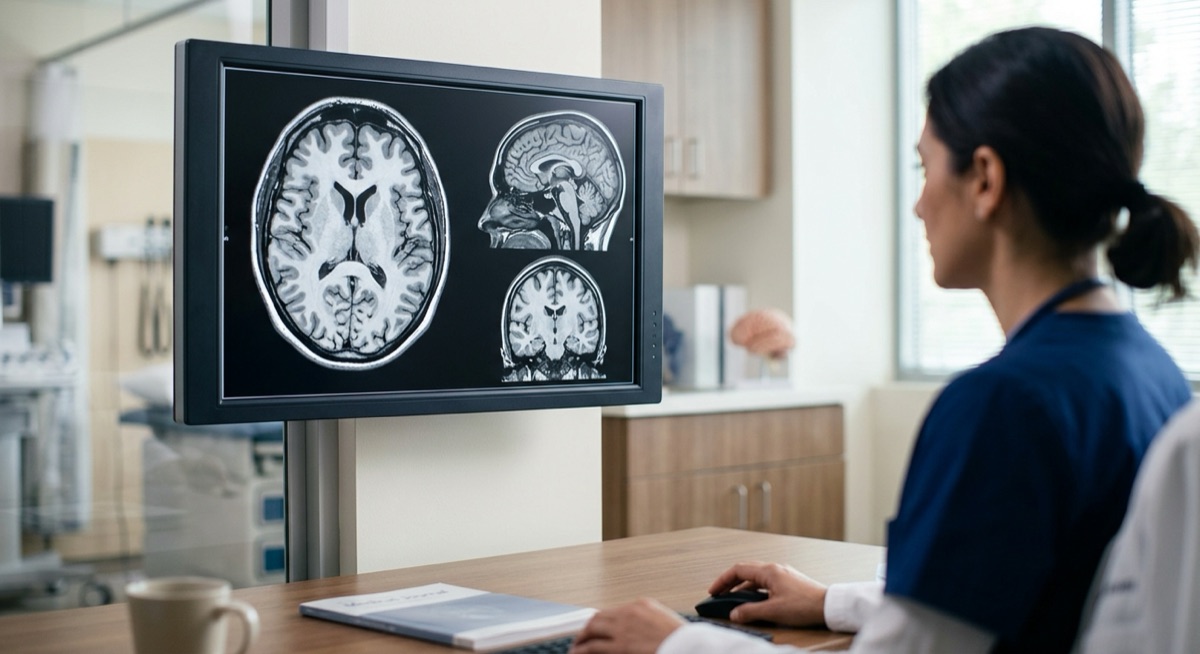
مصطلح مخيف يغطي حالات شديدة الاختلاف. كيف يوضع التشخيص وما خيارات العلاج — بلغة هادئة.
Few phrases frighten patients like "brain tumour". The term covers a wide spectrum — from slow-growing benign tumours discovered by chance to aggressive malignancies — and the right response differs enormously across that spectrum. Understanding the basics reduces fear and improves decisions.
How brain tumours come to light
Common presentations include progressively worsening headaches (often worse in the morning), new seizures in an adult, gradual weakness or speech difficulty, personality change, or visual problems. Increasingly, small tumours are found incidentally on scans done for something else entirely.
Diagnosis
MRI with contrast is the cornerstone. It shows the tumour's location, size and relationship to critical brain regions. Sometimes the picture is characteristic enough for a confident working diagnosis; in other cases, tissue diagnosis (biopsy or surgical removal) is needed to know exactly what the tumour is.
Not all tumours are treated the same way
- Benign, slow-growing tumours (such as many meningiomas) that cause no symptoms are often simply monitored with periodic MRI.
- Surgery is the main treatment when a tumour causes symptoms or shows growth — the goal is maximal safe removal, preserving function. Neuronavigation and microsurgical technique are standard tools.
- Radiosurgery (such as Gamma Knife) treats selected tumours with focused radiation, without an incision — an option for specific sizes, locations and tumour types.
- Oncological treatment (radiotherapy, chemotherapy) joins the plan for malignant tumours, coordinated by a multidisciplinary team.
What a good process looks like
A clear MRI review, a named diagnosis (or an honest plan to reach one), a treatment recommendation with alternatives explained, and room for a second opinion. Any provider should welcome all four.
This article is general information, not medical advice. Every case is different — please discuss your own situation with a qualified specialist.